
Table of Contents
- What Is Monsoon-Proof Interior Design?
- Why Do Ahmedabad Homes Need Monsoon-Friendly Interiors?
- Common Interior Design Mistakes During Ahmedabad Monsoon
- Best Rooms to Prioritize for Monsoon-Proof Interior Design
- Monsoon-Proof Interior Design for Apartments in Ahmedabad
- Monsoon-Proof Interior Design for Villas and Bungalows
- Is Monsoon-Proof Interior Design More Expensive?
- How Does InVisual Design Monsoon-Ready Homes in Ahmedabad?
- Why Choose InVisual for Monsoon Home Interior Services in Ahmedabad?
- FAQs
- Final Thoughts
Ahmedabad homes experience dramatically different weather conditions throughout the year. While summers are hot and dry, the monsoon season brings higher humidity, moisture, dampness, and reduced ventilation, all of which can affect interior materials and finishes. InVisual’s own climate-focused material guidance notes that monsoon humidity can impact wooden furniture, laminates, wall finishes, flooring, fabrics, cabinetry, and metal fixtures.
That is why designing a beautiful home in Ahmedabad should not be limited to colours, furniture, lighting, or décor. Your interiors also need to be designed for the city’s seasonal conditions.
Professional monsoon-proof interior design Ahmedabad focuses on creating spaces that remain attractive, comfortable, functional, and easier to maintain even when humidity levels increase.
At InVisual Interior Designer Ahmedabad, our approach combines thoughtful space planning, suitable material selection, practical storage, ventilation considerations, and long-term usability to create homes designed around the Ahmedabad lifestyle.
What Is Monsoon-Proof Interior Design?
Monsoon-proof interior design is an approach to home interiors that considers how humidity, water exposure, dampness, poor airflow, and seasonal moisture can affect different areas and materials inside a property.
It does not mean making every surface completely waterproof.
Instead, it means making intelligent design decisions such as:
- Selecting moisture-resistant interior materials
- Protecting moisture-prone furniture and cabinetry
- Planning better ventilation and airflow
- Using appropriate wall and ceiling finishes
- Designing kitchens and bathrooms for easier moisture management
- Avoiding unsuitable materials in damp-prone areas
- Creating practical storage that does not trap excessive humidity
- Choosing flooring according to the use and exposure of each space
The result is a home that is better prepared for Ahmedabad’s changing seasonal conditions.
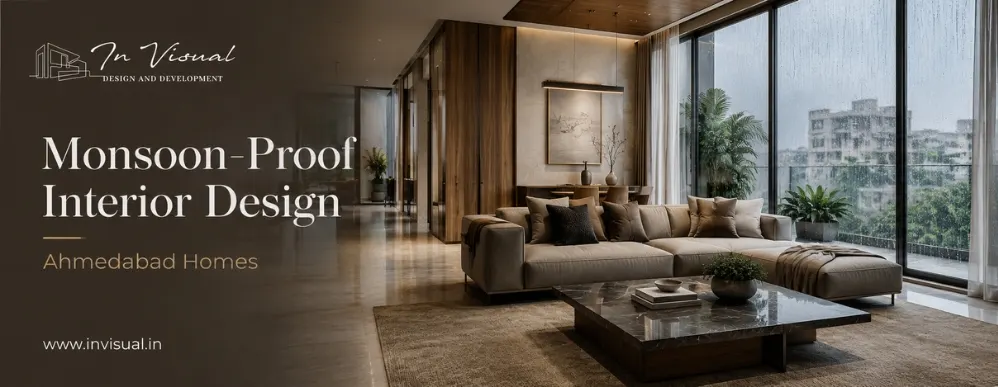
Why Do Ahmedabad Homes Need Monsoon-Friendly Interiors?
Ahmedabad is generally associated with hot and relatively dry conditions, but monsoon months introduce greater humidity and moisture into homes. In August 2026, the city was also experiencing persistent high humidity alongside overcast monsoon conditions.
When an interior has not been designed with these conditions in mind, homeowners may notice issues such as:
Damp walls, musty smells, swollen wood, laminate damage, moisture inside cabinets, peeling finishes, difficult-to-maintain fabrics, or corrosion on unsuitable metal fixtures.
The problem can become more noticeable in:
- Bathrooms
- Kitchens
- Utility areas
- Balconies
- Window-side furniture
- Ground-floor homes
- Closed wardrobes
- Shoe-storage areas
- Poorly ventilated rooms
Hiring an experienced interior designer for monsoon homes in Ahmedabad can help identify these vulnerabilities during the planning stage rather than after the interiors have already been completed.
1. Choose Moisture-Resistant Materials Carefully
Material selection is one of the most important elements of moisture-resistant interiors in Ahmedabad.
A material that looks premium in a showroom may not necessarily be appropriate for every area of your home.
Consider the location of every material
For example, materials used for a dry bedroom wardrobe do not face the same conditions as those used near a kitchen sink, bathroom vanity, balcony entrance, or utility area.
A professional designer evaluates:
Exposure + Usage + Ventilation + Maintenance + Appearance + Budget
before recommending the material.
This creates a better balance between aesthetics and durability.
2. Protect Wooden Furniture from Excessive Moisture
Wood adds warmth, richness, and character to interior spaces, but excessive moisture can affect certain wooden materials and finishes.
That does not mean homeowners need to remove wood from monsoon-friendly interiors.
The solution is to use the right type of material in the right location.
Interior planning may include:
- Appropriate engineered boards where suitable
- Properly finished wooden surfaces
- Moisture-resistant substrates in vulnerable zones
- Suitable edge sealing
- Elevated furniture where water contact is possible
- Adequate space between furniture and moisture-prone walls
- Appropriate laminates or surface treatments
At InVisual, material decisions are made according to the actual functional requirements of the home rather than applying the same material everywhere.
3. Design Smarter Modular Kitchens for Ahmedabad Monsoons
The kitchen is one of the most important areas for monsoon home interior services Ahmedabad because water, steam, heat, food preparation, and storage all meet within a relatively compact space.
Poorly planned kitchen interiors may allow moisture to remain around sinks, cabinets, corners, and utility areas.
A monsoon-conscious kitchen should prioritize:
Moisture-resistant sink zones
The cabinetry surrounding the sink requires particular attention because this zone regularly experiences water exposure.
Ventilation
Cooking generates steam and heat. Appropriate ventilation helps remove excess moisture rather than allowing it to remain trapped inside the room.
Practical cabinet planning
Storage should provide convenient access while avoiding unnecessary dead spaces that are difficult to inspect and maintain.
Easy-to-clean finishes
Kitchen materials should support regular cleaning without demanding excessive maintenance.
Functional countertop planning
Countertops, backsplashes, sinks, cabinet edges, and junctions should be planned together instead of as independent design elements.
Good kitchen design is not simply about appearance – it is about how successfully the kitchen performs every day.
4. Make Wardrobes More Monsoon-Friendly
Closed wardrobes can become vulnerable to humidity because they naturally receive less airflow than open areas.
That makes thoughtful wardrobe design particularly important.
For moisture-resistant interiors Ahmedabad, designers can consider:
- Appropriate internal materials
- Smart ventilation provisions where required
- Sensible wardrobe depth
- Correct placement against walls
- Moisture-resistant backing where conditions require it
- Easy-access internal layouts
- Avoiding unnecessary closed cavities
- Organized storage rather than overcrowding
A beautiful wardrobe that smells damp every monsoon is not good interior design.
Design must solve practical problems as well as visual ones.
5. Use Appropriate Wall Finishes
Walls are one of the first places homeowners notice moisture-related problems.
However, adding an expensive decorative finish over an existing dampness problem is not a real solution.
Before finalizing wall décor, designers should understand whether the wall has:
- Exterior exposure
- Plumbing nearby
- Existing seepage
- Window leakage
- Poor ventilation
- Bathroom adjacency
- Previous damp patches
Any underlying waterproofing, plumbing, seepage, or building-envelope problem should be addressed appropriately before decorative interior finishes are installed.
Once the underlying condition has been handled, suitable paints, panels, textures, or other finishes can be selected based on the location.
6. Plan Bathroom Interiors Around Moisture
Bathrooms naturally contain more moisture than most parts of a home.
That makes them a priority in monsoon-proof interior design Ahmedabad.
Important considerations include:
Proper ventilation
An exhaust or effective airflow route can help remove moisture generated during bathing.
Suitable vanity materials
Vanities should be designed for an environment where occasional water exposure is expected.
Practical storage
Bathroom cabinets should provide enough space without creating unnecessarily complicated corners where moisture and dirt become difficult to manage.
Easy-maintenance surfaces
Finishes should be selected for regular cleaning and practical everyday use.
Thoughtful wet and dry zoning
Separating wet and relatively dry areas wherever the layout permits can improve functionality and maintenance.
7. Improve Natural Ventilation and Airflow
Material selection alone cannot solve every humidity problem.
Air circulation plays an equally important role.
Monsoon-friendly space planning should avoid unnecessarily blocking natural airflow through the home.
This may involve:
- Thoughtful furniture positioning
- Keeping key windows functional
- Avoiding oversized furniture near ventilation points
- Planning internal circulation intelligently
- Using exhaust systems in moisture-heavy spaces
- Allowing natural light into suitable areas
General monsoon-home guidance also recommends cross-ventilation, natural sunlight, bathroom and kitchen exhausts, and attention to cracks or leakage as practical measures for controlling dampness.
For an interior designer, this means ventilation should be considered during space planning – not after all the furniture is installed.
8. Select Monsoon-Friendly Flooring
Flooring determines not only the appearance of a home but also how easily it can be cleaned and maintained.
The best option depends on:
- Room usage
- Water exposure
- Existing subfloor condition
- Maintenance expectations
- Desired aesthetic
- Budget
Entrance areas, kitchens, balconies, bathrooms, bedrooms, and living rooms do not necessarily need identical flooring strategies.
A professional interior designer for monsoon homes Ahmedabad can recommend materials according to the functional requirements of each area.
9. Create a Practical Monsoon Entryway
Rainwater usually enters a home through people – not through the walls.
Wet footwear, umbrellas, bags, and raincoats can quickly make entrance areas messy.
A thoughtfully designed foyer or entrance can include:
- Dedicated footwear storage
- Easy-clean flooring
- Umbrella storage
- A practical drop zone for wet accessories
- Easily accessible cleaning space
- Appropriate ventilation around shoe cabinets
This is a relatively small design decision that can make the entire home easier to maintain during monsoon.
10. Choose Fabrics That Are Easier to Maintain
Heavy fabrics can feel luxurious, but not every textile works equally well during periods of higher humidity.
For curtains, upholstery, cushions, bedding, and decorative fabrics, consider:
- Breathability
- Drying time
- Maintenance requirements
- Dust accumulation
- Frequency of cleaning
- Room ventilation
Lighter, breathable textiles such as cotton and linen are often recommended during humid monsoon conditions because they encourage a lighter, airier indoor environment.
The goal is not to eliminate premium fabrics but to use them intelligently according to the room and lifestyle.
11. Don’t Ignore Balcony and Window Areas
Balconies and windows form an important transition between outdoor weather and interior spaces.
During monsoon, these areas deserve special attention.
Your interior plan should consider:
- Window sealing
- Rainwater entry risk
- Furniture placement near windows
- Curtain material
- Balcony drainage
- Indoor-outdoor flooring junctions
- Electrical points close to weather-exposed areas
- Storage placed against external walls
Decorative furniture should not block inspection or maintenance of areas where leakage could occur.
Good interior design keeps maintenance accessible.
12. Design Storage That Works in Every Season
Storage is often planned according to capacity alone.
For a climate-conscious home, however, location is equally important.
Different types of storage may require different approaches:
Wardrobes
Need organized internal layouts and appropriate material selection.
Kitchen cabinets
Need consideration for steam, water, heat, and cleaning.
Shoe units
Benefit from thoughtful airflow.
Bathroom storage
Requires moisture-conscious materials and practical positioning.
Utility storage
Should withstand the demanding conditions typical of washing and cleaning areas.
InVisual also emphasizes customized interiors and space optimization for Ahmedabad homes rather than relying only on generic layouts.
13. Avoid Overdesigning Moisture-Prone Areas
More decorative layers do not always mean better interiors.
Excessive grooves, unnecessary panels, complex false structures, difficult-to-access corners, and densely layered décor can sometimes make cleaning and maintenance harder.
For homes where long-term practicality matters, use decoration strategically.
A balanced interior should deliver:
Visual Appeal + Functionality + Durability + Maintainability
This is particularly important for Ahmedabad homeowners who want premium interiors without turning routine maintenance into a constant task.
14. Inspect Existing Homes Before Renovation
If you are renovating an existing property, simply covering old surfaces with new finishes can hide problems rather than solve them.
Before starting a renovation, the design team should examine visible signs such as:
- Damp walls
- Cracks
- Peeling paint
- Water stains
- Plumbing leakage
- Window seepage
- Damaged cabinetry
- Swollen panels
- Flooring issues
- Poorly ventilated zones
Any condition requiring specialized waterproofing, plumbing, structural, or building-envelope repair should be resolved through the appropriate professional before the final decorative layer is applied.
InVisual’s home renovation approach focuses on retaining what is useful, upgrading what needs improvement, and reimagining the space around contemporary functionality and design.
Common Interior Design Mistakes During Ahmedabad Monsoon
Mistake 1: Choosing materials only by appearance
A visually attractive finish may not work in every location.
Better approach: Select according to exposure, function, maintenance, and climate.
Mistake 2: Ignoring existing seepage
Interior decoration cannot permanently solve an unresolved source of water ingress.
Better approach: Correct the source before finishing the wall.
Mistake 3: Blocking ventilation with furniture
Large wardrobes or decorative panels placed incorrectly can reduce airflow.
Better approach: Include ventilation in the layout planning stage.
Mistake 4: Using the same board everywhere
Kitchens, bathrooms, bedrooms, and utility areas experience different conditions.
Better approach: Specify materials according to each zone.
Mistake 5: Creating inaccessible storage
If a corner cannot be inspected or cleaned easily, problems can remain unnoticed.
Better approach: Prioritize accessible and practical storage.
Mistake 6: Focusing only on monsoon
Ahmedabad interiors also need to perform during hot, dry months.
Better approach: Choose materials and designs that provide year-round performance, not just seasonal protection.
Best Rooms to Prioritize for Monsoon-Proof Interior Design
If your budget requires prioritization, start with areas that experience the highest combination of water, humidity, enclosed storage, or outdoor exposure:
- Kitchen
- Bathrooms
- Utility area
- Wardrobes
- Entrance and shoe storage
- Balcony-connected rooms
- Furniture near external walls
- Window-side cabinetry
Planning these areas correctly can significantly improve the everyday practicality of your interiors.
Monsoon-Proof Interior Design for Apartments in Ahmedabad
Ahmedabad apartments present their own design considerations.
Available ventilation, balcony orientation, external wall exposure, window placement, and existing builder specifications can vary significantly from one property to another.
Therefore, monsoon home interior services Ahmedabad should be customized to the individual apartment.
Instead of applying the same template to every property, designers should understand:
- Floor level
- Direction and location of exterior walls
- Existing ventilation
- Balcony connection
- Kitchen layout
- Bathroom positioning
- Family lifestyle
- Storage requirements
- Existing moisture issues
This creates an interior that is designed for the actual home and its users, not simply based on a Pinterest reference.
Monsoon-Proof Interior Design for Villas and Bungalows
Villas and independent homes often have more surfaces directly exposed to outdoor conditions.
Ground-floor rooms, terraces, landscaped areas, balconies, larger windows, and external walls can influence interior planning.
A comprehensive approach can coordinate:
Architecture + Interior Design + Material Selection + Space Planning + Practical Execution
InVisual offers architectural and interior services covering private residences, apartments, home renovation, and customized residential planning in Ahmedabad.
Is Monsoon-Proof Interior Design More Expensive?
Not necessarily.
The objective is not to replace every standard material with the most expensive option.
A better strategy is to spend intelligently in vulnerable areas.
For example:
- Premium moisture-resistant material may matter more below a kitchen sink than in a dry decorative niche.
- Better bathroom vanity construction may provide more practical value than adding unnecessary decorative panels.
- Correcting leakage before installing expensive finishes can prevent avoidable future work.
Therefore, the right question is not:
“Which is the most expensive material?”
It is:
“Which material is appropriate for this particular area?”
Good interior planning optimizes both performance and budget.
How Does InVisual Design Monsoon-Ready Homes in Ahmedabad?
At InVisual Interior Designer Ahmedabad, interior design is approached as more than surface decoration.
The objective is to create spaces that combine aesthetics, functionality, climate awareness, material intelligence, and long-term usability.
InVisual’s wider residential approach includes custom home interiors and renovation, while its climate-focused guidance emphasizes choosing materials according to Ahmedabad’s seasonal conditions.
Our approach to monsoon-proof interior design Ahmedabad can include:
1. Understanding the property
We evaluate the home’s layout, lifestyle requirements, existing conditions, and moisture-sensitive areas.
2. Identifying vulnerable zones
Kitchens, bathrooms, wardrobes, utility areas, balconies, windows, and external walls receive special attention.
3. Selecting suitable materials
Materials are considered according to their application instead of following a one-material-fits-all approach.
4. Planning functional storage
Storage is customized around usability, organization, accessibility, and location.
5. Considering ventilation and natural light
Furniture and layouts are planned without unnecessarily compromising airflow.
6. Creating cohesive aesthetics
Practical design does not have to look industrial or basic.
Moisture resistance and premium aesthetics can work together when interiors are planned correctly.
Why Choose InVisual for Monsoon Home Interior Services in Ahmedabad?
Choosing an experienced local interior designer provides an important advantage: an understanding of Ahmedabad’s climate, housing patterns, lifestyle requirements, and material considerations.
InVisual positions its residential interiors around customized design, climate understanding, low-maintenance material selection, functionality, and long-term value.
Homeowners can choose InVisual for:
- Customized residential interior design
- Climate-conscious material selection
- Space planning
- Home renovation
- Kitchen and storage planning
- Modern and luxury interiors
- Architecture and interior integration
- Functional, low-maintenance design
- Ahmedabad-focused interior solutions
Whether you are designing a new apartment, renovating an existing home, or planning a premium residence, a monsoon-conscious design strategy can help you create interiors that remain functional across seasons.
FAQs
1. What is monsoon-proof interior design?
2. Which materials are best for moisture-resistant interiors in Ahmedabad?
3. How can I protect wardrobes during Ahmedabad’s monsoon?
4. Can an interior designer fix wall seepage?
5. Is plywood suitable for monsoon-friendly interiors?
6. How can I make my kitchen monsoon-friendly?
7. How do I prevent moisture inside wardrobes?
8. Should I renovate my home before or after monsoon?
9. Who provides monsoon-proof interior design services in Ahmedabad?
10. How can I find an interior designer for monsoon homes in Ahmedabad?
Final Thoughts
A home should look beautiful on the day it is completed, but good interior design should continue performing years later and through every season.
Ahmedabad’s changing conditions make climate-conscious planning particularly valuable. From wardrobes and modular kitchens to bathrooms, wall finishes, storage, flooring, fabrics, and ventilation, each design decision can influence how comfortably your home handles the monsoon.
Investing in monsoon-proof interior design Ahmedabad is therefore not simply about protecting furniture from rain. It is about creating a more thoughtful, maintainable, comfortable, and long-lasting home.
If you are planning a new home or renovation, InVisual Interior Designer Ahmedabad can help create interiors that balance premium design with practical, climate-aware thinking.
Design Beautifully. Prepare for Every Season.
Contact InVisual today to discuss your monsoon-ready home interior project in Ahmedabad.
